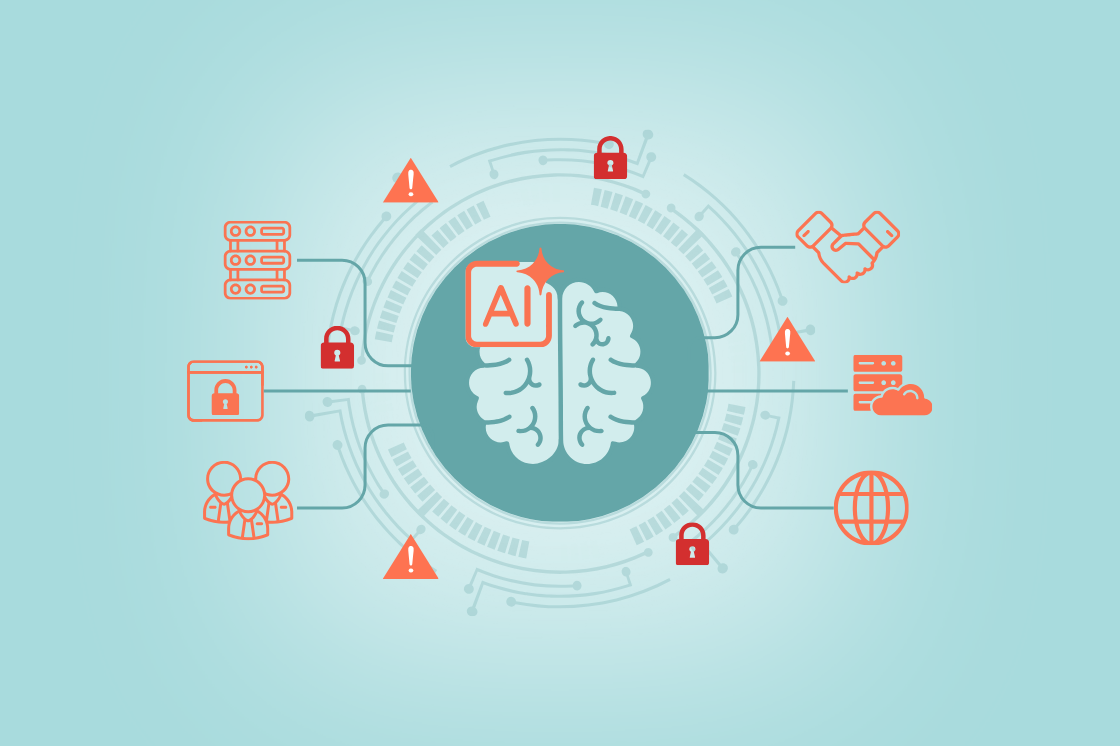
Artificial intelligence is changing cybersecurity faster than most organizations can adapt. It is not introducing a single new risk. It is multiplying existing risks by increasing speed, scale, and complexity across the entire organization.
This is the fourth post in a short series inspired by the World Economic Forum Global Cybersecurity Outlook. In earlier posts, we explored why cybersecurity is now a leadership issue, why unclear processes undermine response, and how third-party relationships have become a major source of cyber exposure.
In this post, we focus on the next acceleration point. AI is reshaping cyber risk from two directions at once: how attacks are carried out against organizations, and how organizations themselves are using AI internally without clear rules or accountability.
Together, these forces are expanding cyber risk well beyond traditional security boundaries.
AI Is Accelerating External Cyber Threats
The World Economic Forum outlook highlights growing concern about AI-enabled cyber attacks. A majority of organizations expect artificial intelligence to significantly increase the scale and sophistication of cyber threats in the near term.
AI allows attackers to move faster and with greater precision. Attacks that once required time and effort can now be generated and adapted automatically.
As a result:
- Phishing attacks are more convincing and harder to detect
- Malware adapts more quickly to defenses
- Vulnerabilities can be discovered and exploited faster
- Attack volumes increase while response windows shrink
These changes mean cyber incidents unfold more quickly and with less warning. Organizations that rely solely on technical defenses may struggle to keep pace if decision-making and response processes are not equally mature.
Internal Use of AI Introduces New Cyber Risk
At the same time, AI is being adopted rapidly inside organizations.
Employees use AI tools to write documents, analyze data, generate code, and automate tasks. In many cases, this adoption is happening without clear guidance, documentation, or oversight.
Common internal AI-related risks include:
- Sensitive data being shared with external AI tools
- AI-generated outputs being used without validation
- Automated decisions occurring without clear accountability
- Security and compliance controls being bypassed for speed
The WEF outlook notes that governance and control have not kept pace with AI adoption in many organizations. As a result, leaders often lack visibility into where AI is being used and how it affects operational risk.
These risks are often invisible until an incident exposes them.
Speed Without Process Clarity Increases Exposure
What connects external AI-driven attacks and internal AI use is speed.
AI accelerates activity across the organization. Decisions are made faster. Actions are automated. Dependencies become harder to see.
When speed increases but processes are unclear, cyber risk grows.
Organizations often struggle to answer basic questions:
- Who approved this AI-supported activity?
- What data is being used or shared?
- Who is accountable if an AI-driven action causes harm?
- How does this affect incident response and recovery?
If these questions cannot be answered quickly, teams are forced to improvise during critical moments, when mistakes are most costly.
Visibility Gaps Create Hidden Risk
One of the biggest challenges with AI-related cyber risk is lack of visibility.
Leaders may not fully understand:
- Where AI is used in critical business processes
- How AI affects dependencies between systems and teams
- Where automated decisions introduce single points of failure
- Which AI-driven incidents could disrupt operations entirely
The WEF outlook points to growing complexity as a key reason organizations overestimate their resilience. Confidence is often based on traditional controls, while AI-driven dependencies remain poorly understood.
Why Documented Processes Enable Better Decisions in an AI-Driven Environment
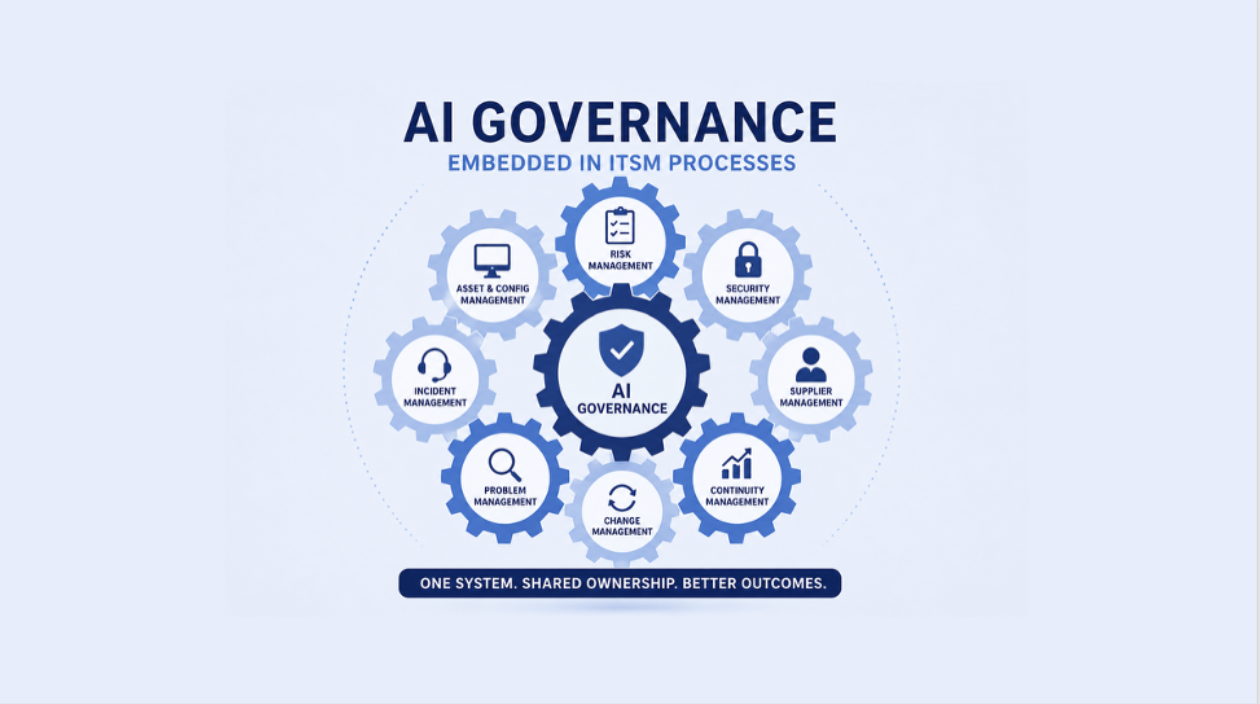
Managing AI-related cyber risk requires more than policies or technical controls. It requires clear, shared processes that define how AI is used, governed, and reviewed during normal operations and during disruption.
Organizations need to document:
- How AI supports critical processes
- Which decisions can be automated and which require human judgment
- How AI outputs are reviewed or approved
- Who owns accountability for AI-supported actions
This is where process documentation becomes a resilience capability, not just an administrative task.
Operational resilience platforms like Navvia help organizations document and connect these processes across teams and technologies, making AI usage visible and manageable within day-to-day operations.
Clear documentation also supports leadership decision-making.
When leaders understand:
- Where AI affects critical decisions
- What information they will receive during incidents
- When human intervention is required
- How AI influences recovery timelines
They can act faster and with greater confidence. Operational resilience assessments help surface these decision points in advance, rather than discovering them during a crisis.
From AI Risk to Operational Resilience
The shift organizations need to make is from treating AI risk as a technical issue to managing it as an operational reality.
That means:- Treating AI-supported processes as part of core operations
- Documenting how work actually flows when AI is involved
- Testing assumptions through scenarios and reviews
- Continuously improving clarity, ownership, and coordination
This approach ensures AI strengthens operations instead of introducing unmanaged risk.
Closing Thought
AI multiplies cyber risk wherever processes, ownership, and accountability are unclear.
Organizations that treat AI as a purely technical concern will struggle to keep up. Those that embed AI into well-defined processes, supported by regular assessment and documentation, will be better positioned to respond and recover.
In the final post in this series, we will explore what resilient organizations do differently, and how they turn awareness into consistent operational capability.