With the release of ITIL 5, I find myself coming back to something I’ve said for years: “It doesn’t matter which best-practice framework you adopt, as long as you actually practice it.”
The Best Practice Myth
I was introduced to the world of best practices on May 12, 1980. I just didn’t know it at the time.
I started out as a field engineer for a mainframe company. One thing about those mainframe systems: they broke a lot.
To compensate, we got really good at handling incidents, implementing changes, getting to the root cause of problems, managing our configurations, establishing service levels, and improving availability.
In fact, the better we practiced the essentials, the more we were valued by our customers and the more we stood out from the competition.
Fast forward to today, and we’re often told that adopting best-practice frameworks, such as ITIL for service management, COBIT for governance, and NIST CSF for cybersecurity, is essential to operational resilience and IT performance. That’s the theory, at least.
Formal studies and industry research consistently show that adopting IT and governance frameworks does not guarantee results. Research from Gartner, ISACA, the Project Management Institute, and McKinsey & Company indicates that only about 25 to 35 percent of framework-driven initiatives achieve sustained success. Most stall after initial adoption, not because the frameworks are flawed, but because organizations fail to embed them into daily behavior, leadership practices, and ongoing governance.
I can tell you from experience that best practices are only a guide. Real success comes from the actual practice of them. It comes from daily behavior, real execution, consistency, and leaders holding teams accountable.
Why Framework Adoption Often Fails
Too often, failed implementations are blamed on “a lack of senior management buy-in” or “resistance to change.” Those are excuses.
Management is paid to deliver results. If you can demonstrate that a framework makes IT service management faster, better, or cheaper, you will get their undivided attention.
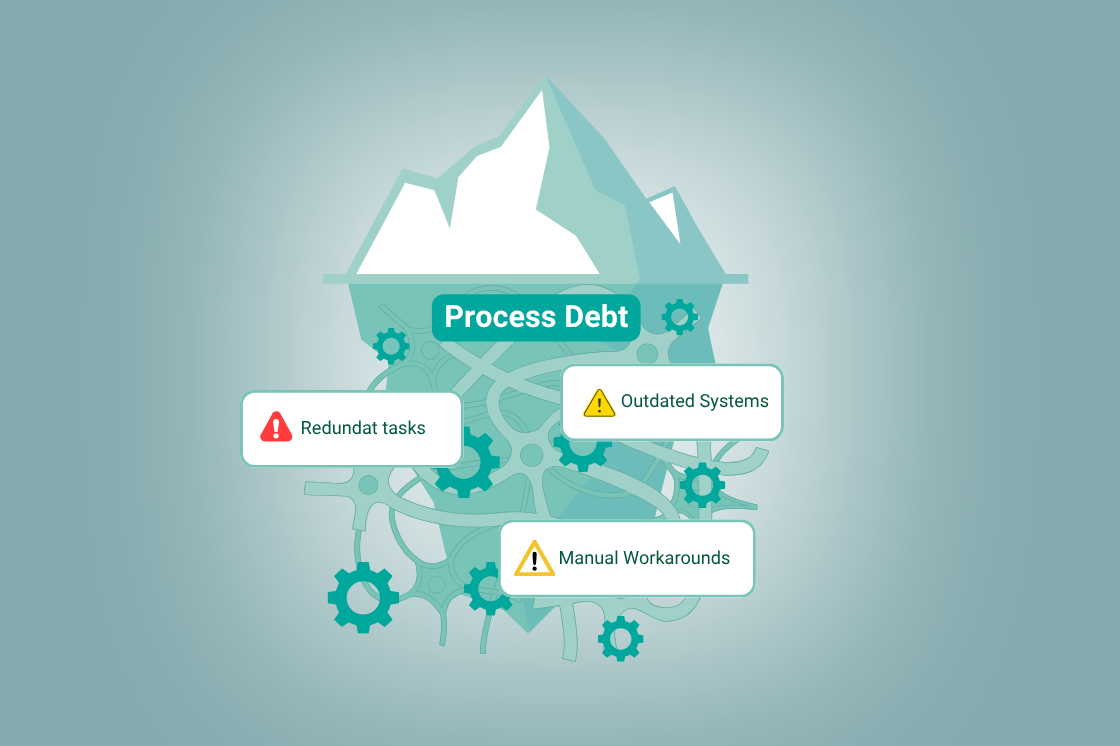
The real problem is that many so-called implementations are highly theoretical and compliance-heavy. They get in the way of real work, introduce friction, and deliver little visible benefit.
If frameworks were truly a silver bullet, services wouldn’t go down, cyber breaches wouldn’t happen, and customers would be endlessly satisfied. That’s not the world most of us live in.
Implementations fail because we focus too much on processes and tools and hope people will simply follow.
ITSM is a Human Endeavour
ITSM succeeds or fails based on human behavior, not frameworks, processes, or tools.
What’s the most common reaction when you tell someone to do something, like following a change management process? It’s almost always, “Why?”
That was the premise of Simon Sinek’s 2009 TED Talk, How Great Leaders Inspire Action. You have to start with the why.
Before you get adoption, you need to clearly explain why something is important. Processes explain the what, and ITSM tools explain the how, but it’s up to you to inspire the why.
And don’t forget, the why is different depending on who you’re talking to. What matters to a CIO can be radically different from what matters to a practitioner on the ground. If you want people to change how they work, you need to meet them where they are.
Find a catalyst for change. One tool I’ve used throughout my career is assessments, not just to score maturity, but to actually talk to people. When you uncover real pain points and connect improvement efforts to problems they care about, resistance drops fast. Nothing gets people on board quicker than helping solve one of their problems.
Involve people in the change. It’s much harder to resist a process when you helped shape it. Participation creates ownership, and ownership drives practice.
Don’t skip training and assume people will figure it out. I once worked on an ITSM tool implementation where the sponsor said, “We have smart people, they’ll figure it out.” They didn’t. If you want people to follow processes, they need to understand them and see how those processes fit into their daily work.
And a little salesmanship goes a long way. Enlist respected colleagues with strong reputations to help champion the change. People like to follow winners.
Earlier in this post, I said the value is in the practice. That means showing, in real and practical ways, how the change saves time, reduces cost, or improves customer service. When people see the benefit in their day-to-day work, practice stops being forced and starts becoming habit.
What Practicing ITSM Actually Means
ITIL, COBIT, and NIST CSF are all names for frameworks. Stop thinking about best practices as a noun and start thinking about them as verbs.
Practicing ITSM means asking whether everyone handles a change or reports an incident the same way. Is the right information consistently captured at the right level of detail, rather than just marked as “standard” or “completed”? There is real value in that data when it is used for analysis, problem determination, and continual improvement.
It also means asking where exceptions are being made. Are security policies bypassed because a client doesn’t want disruption, or because multi-factor authentication is considered too inconvenient? Those decisions say far more about how ITSM is practiced than any documented process ever will.
Practicing ITSM means producing reports that actually provide value. Early in my career, we were able to get to the root cause of a recurring issue because of comprehensive incident and asset management. That insight saved the company significant money and avoided reputational harm. The framework didn’t deliver that outcome. Consistent practice did.
It also means spending time overseeing processes and tools, looking for incremental improvement, instead of waiting until frustration builds and throwing everything out because “the tool doesn’t work anymore.”
And finally, it means talking to people. Regularly. Looking for ways to improve, simplify, and streamline how work actually gets done.
If you want to become good at something, you have to practice the basics. That’s where frameworks help. They don’t do the work for you, but they guide you on what good practice looks like when it’s applied consistently.
Best-practice frameworks are only a guide. Success comes from daily behavior, real execution and oversight, and leaders holding teams accountable.
Best practice frameworks are only a guide, success comes from daily behavior, real execution and oversight, and leaders holding teams accountable.