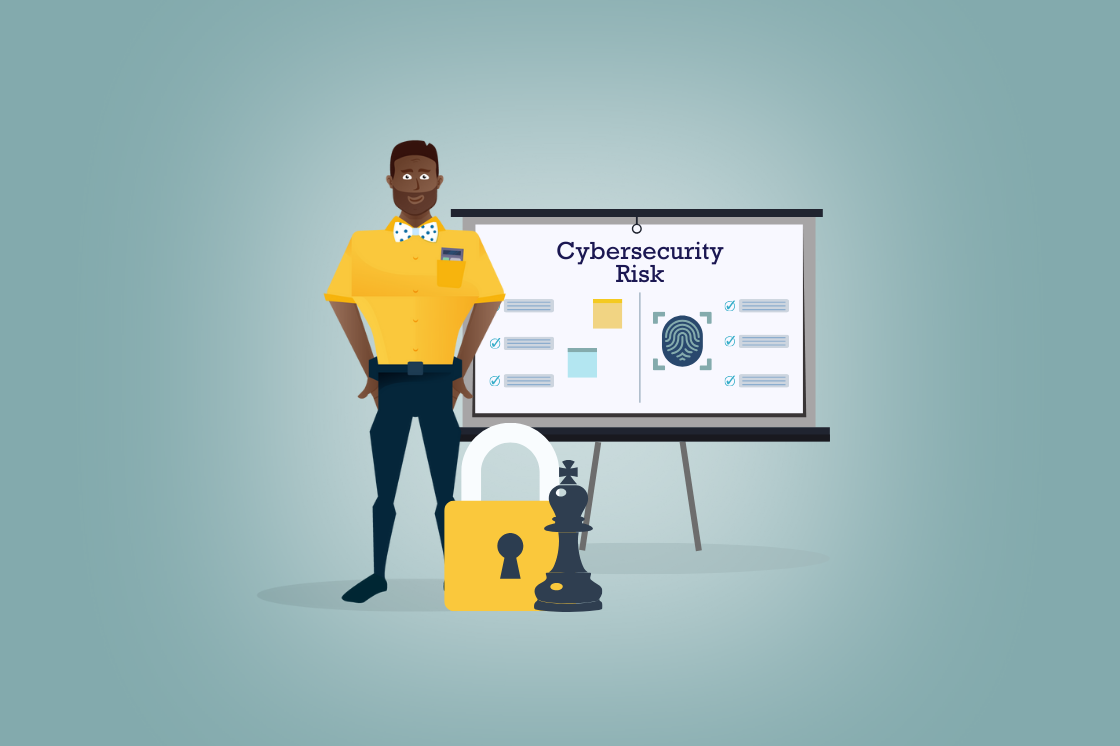
Cybersecurity is no longer something only IT or security teams need to worry about. It has become a leadership issue—one that directly affects how an organization operates, serves customers, and earns trust.
When systems go down, the impact is felt across the entire organization. Work stops. Customers are affected. Trust is damaged. In some cases, regulators get involved. These are business problems, not technical ones.
This post is the first in a short series inspired by the World Economic Forum Global Cybersecurity Outlook, which makes this reality clear.
In the latest outlook, nearly three-quarters of organizations reported an increase in cyber risk over the past year, reflecting a threat environment that continues to intensify. Leaders across many industries now rank cyber threats among the biggest risks their organizations face.
Attacks like ransomware, supply-chain disruptions, data leaks, and major outages are no longer rare. In fact, almost two-thirds of large organizations now identify third-party and supply-chain exposure as their greatest cybersecurity challenge. Many organizations plan for disruption as a matter of course, not as an exception.
And yet, this is where the gap begins.
Despite growing awareness, many organizations still manage cybersecurity risk in old ways. Responsibility is spread across teams, pushed down the organization, or treated mainly as a compliance task. When a real incident happens, it quickly becomes clear that no one person or group fully owns the response.
This series starts with that disconnect: cyber risk is widely recognized as a business threat, but it is still managed as a technical problem. In the posts that follow, we’ll explore why that gap exists—and what needs to change to close it.
Cyber Incidents are Business Disruptions
Cyber incidents do not stay contained within computers and systems. They disrupt daily operations. They slow down or stop services. Customers notice. Leaders are pulled into urgent decisions.
In some industries, these disruptions can shut down essential services altogether.
Because of this, cyber risk has changed. The key question is no longer, “Can we stop every attack?” The real question is, “Can we keep operating when something goes wrong?”
The WEF outlook highlights a growing mismatch here. While concern about cyber risk is high, many organizations overestimate their ability to respond and recover effectively. Different teams often have different ideas of what “being resilient” actually means, especially under pressure.
Check out our recorded webinar on how to assess your risk: Operational Resilience Starts With Assessment
Why Leadership Matters
Leadership "ownership" does not mean executives need to understand firewalls or security tools. It means they need to set priorities, make responsibilities clear, and connect cyber decisions to what matters most to the business.
Organizations where leaders treat cybersecurity as a shared business responsibility tend to:
- Make decisions faster during incidents
- Invest in readiness, not just prevention
- Focus on protecting the most important services
- Recover more quickly after disruption
By contrast, organizations that leave cyber risk entirely to technical teams often struggle when pressure is high. Decisions slow down. Teams wait for direction. Confusion grows.
This is one reason the WEF outlook points to governance and leadership alignment as critical gaps—not just technology.
A Simpler Way to Think About Cyber Risk
Operational resilience offers a clearer way to think about cybersecurity.
Instead of focusing only on whether systems are secure, resilient organizations focus on outcomes:
- What could stop us from operating?
- Which services matter most?
- How quickly do we need to recover?
- Who makes the call when trade-offs are required?
The Cost of Ambiguity
One of the most concerning signals in the WEF outlook is the inconsistency between confidence and capability. Many organizations believe they are resilient, yet have never tested key assumptions:
- Incident response plans that exist but haven’t been exercised
- Recovery objectives that aren’t tied to real dependencies
- Leadership teams that haven’t practiced decision-making under pressure
When roles and decisions are unclear, organizations are forced to improvise during incidents. That improvisation is expensive, stressful, and often avoidable.
Leadership Sets the Ceiling
There is a limit to how resilient an organization can be—and that limit is set by leadership.
Technology and frameworks are important, but they are only tools. Real resilience comes from clear ownership, well-defined processes, and regular assessment of how the organization actually operates under stress.
This is why many organizations are starting to look beyond checklists and audits, and toward operational resilience platforms—like Navvia—that connect risk, process, and execution directly to how work is actually done.
Operational resilience is not about adding more tools—it is about building resilience into how the organization runs every day.
Key takeaway: Organizations do not become resilient by chance. Leaders decide what the organization is prepared to handle—and how well it will recover when disruption occurs.
Our next post in the series focuses on why cybersecurity fails without clear processes.