Last week, I conducted a poll, asking participants if they preferred having their cameras on or off during Zoom or Teams meetings. Let's delve into the results.
As someone who spends approximately 70% of their work week in meetings with staff, customers, and prospects, I've noticed a significant number of attendees who keep their cameras off.
This led me to conduct a non-scientific poll on LinkedIn to understand the preferences of users.
To clarify, when I say meeting, I am referring to interactive discussion leading to an agreement, a decision, or laying out the next steps. I am excluding presentations or training sessions (although I do have thoughts on this below).
The results showed that 61% of participants prefer having their cameras on, while 39% prefer keeping them off.
I also tracked my meetings over the past two weeks, and this ratio held!
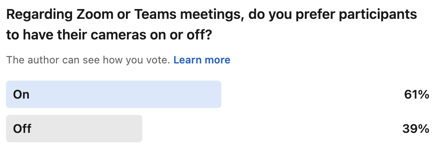
Poll Results via LinkedIn
So, Why do I Prefer?
Being somewhat introverted, I still prefer keeping my camera on, as (I believe) it creates a more genuine and engaging experience for all participants.
Non-verbal communication is also vital, and seeing each other's facial expressions and body language helps enhance understanding and improve collaboration. It's like what I was taught as a kid: look someone in the eye when you talk with them.
The Blank Faces Phenomenon
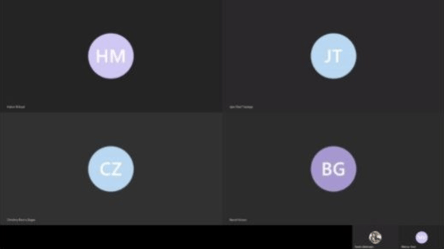
The Blank Faces Phenomenon
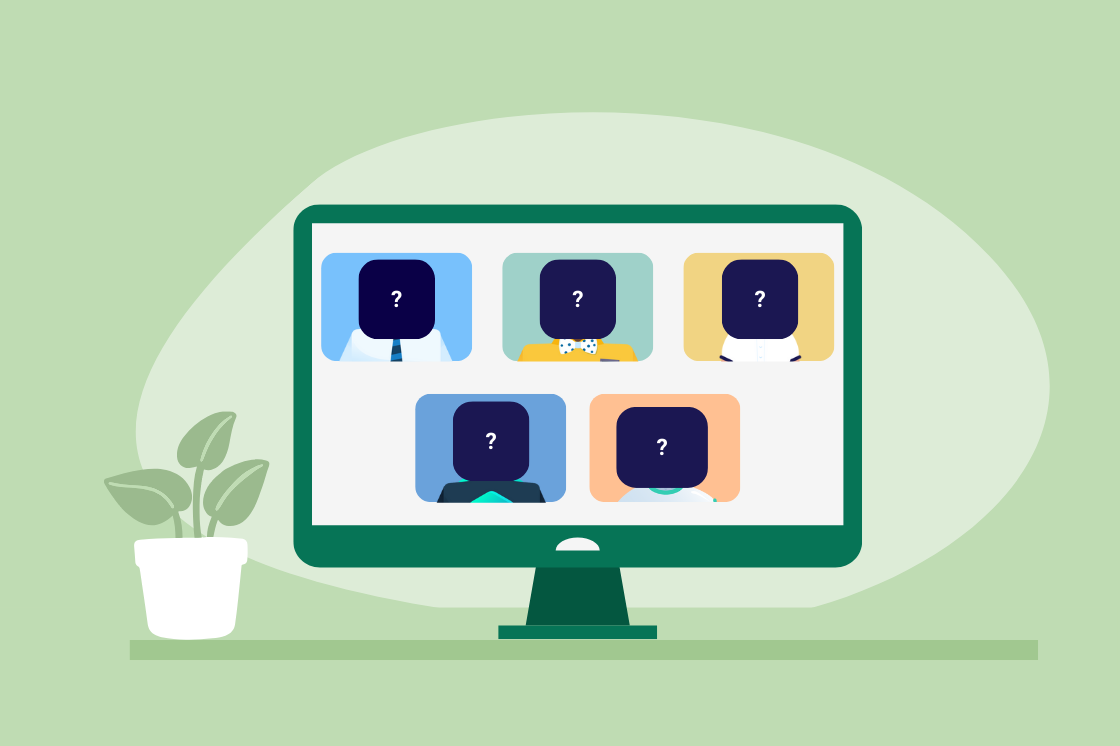
There is something I call the "Blank Faces" phenomenon. That's when participants have cameras off, leading me to wonder if folks are paying attention or multitasking. It's like looking into a bunch of blank faces.
I have been in many meetings where someone was asked a question and didn't respond, only to apologize and say they were doing something else.
Earlier, I said I had thoughts on presentations. Being a software vendor, we give lots of presentations. It can be discouraging when you present to a bunch of blank screens with muted microphones.
This may sound selfish, but a presenter often gets their "energy" from the reactions of others, and giving a presentation to blank screens can be discouraging.
It Comes Down to Personal Choice
I am 100% in the "camera on" camp. However, I respect the choices of those who prefer keeping their cameras off.
I believe that turning them on during interactive discussions can help improve the conversation. It can even help boost engagement levels and enhance the overall experience.
I have asked others why they prefer the camera off. Some say their room is messy or that they do not feel presentable.
Others say, "You already know what I look like. Why do you need to see me?". Some say their camera doesn't work or that they have bandwidth issues.
These are valid reasons.
To be clear, I am not judging. I understand that being on camera can induce stress. About 20% of my staff keep cameras off, and I respect their choice.
Respecting others and their preferences is always essential. So, if you're uncomfortable turning your camera on, that's okay with me.
However, if you are in the "camera off" camp, I encourage you to try it out and see how it impacts the conversation. Who knows, you might just enjoy it.