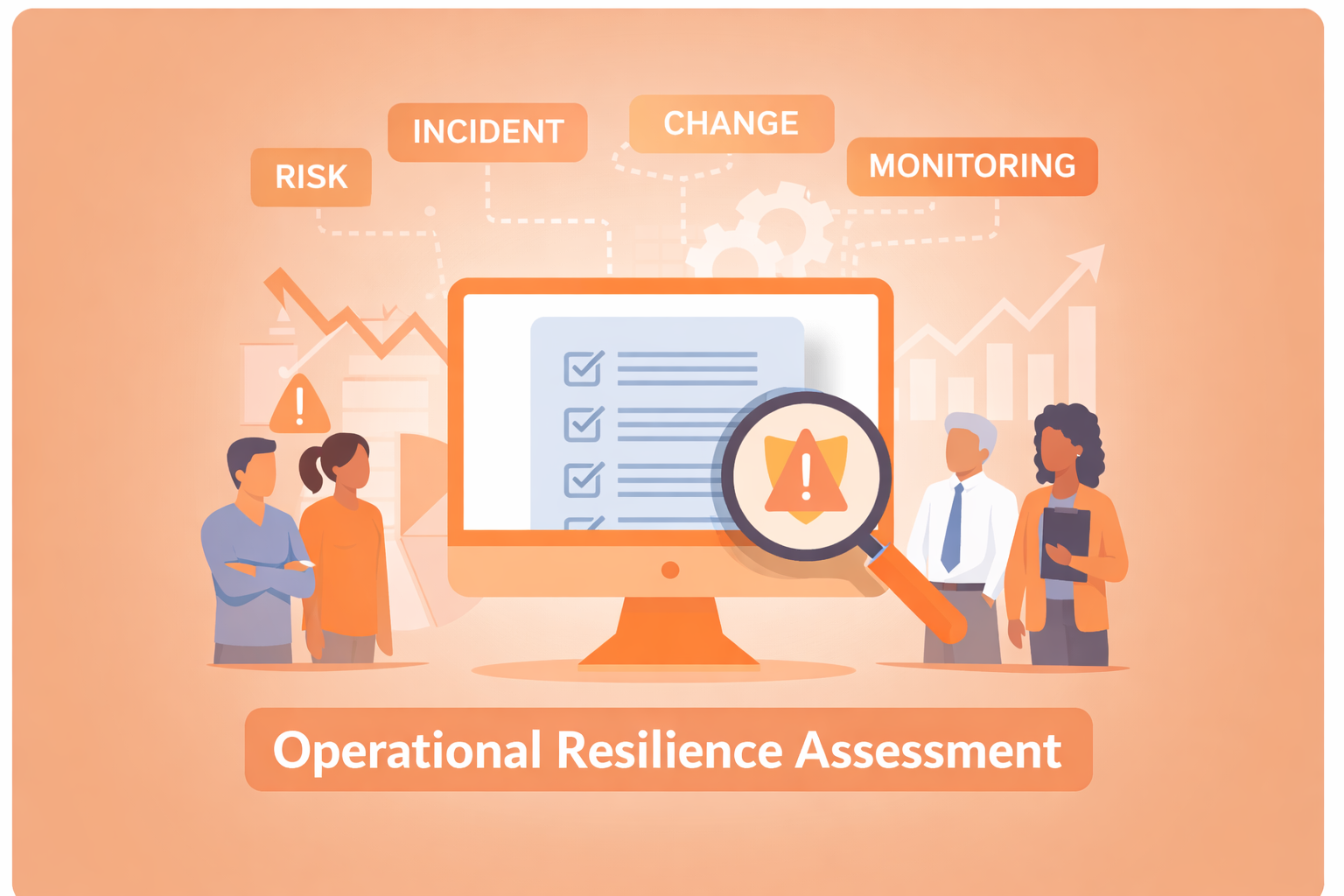
Operational resilience is directly proportional to the strength of your ITSM processes. To achieve operational resilience, process assessment must be an ongoing part of your program.
Whether you are identifying risk through Risk Management and Asset Management, protecting services through Infrastructure and Change Management, detecting issues through Monitoring and Event Management, or responding through Incident Management and Service Continuity — operational resilience starts with ITSM.
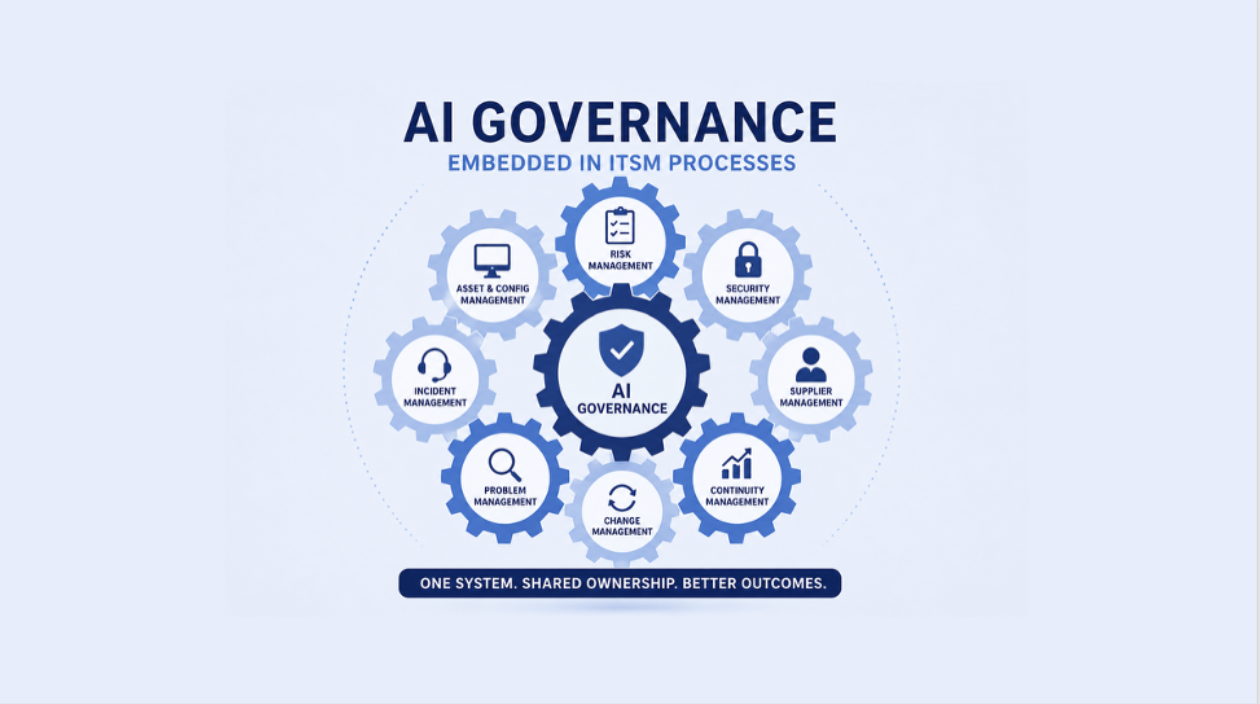
In this 3-part series, we look at operational resilience in practice. More specifically through the lens of ITSM process assessment, design, and governance.
Process assessment shows you how well your processes are actually performing, with the goal of identifying and closing gaps. Process design ensures your processes are built to perform, and process governance ensures they consistently get the job done on an ongoing basis, this is how you adapt to changing needs.
ITSM Process Assessment
Process assessment is where operational resilience starts in practice.
It’s the mechanism that turns operational resilience from a concept into something measurable.
Most organizations believe their processes work. They are documented, implemented in tools, and reported on. But that doesn’t mean they are followed consistently or perform under pressure.
Process assessment shows you what is actually happening.
It highlights where execution breaks down, where teams operate differently, and where risk is introduced through day-to-day work. It exposes gaps that are not visible in documentation or dashboards.
This level of visibility is critical to operational resilience.
Process Assessment as a Catalyst for Change
The value of a process assessment is not in the “score,” it’s in the insights you gain and the opportunity to improve. You begin to see:
- Disagreements between teams
- Gaps no one realized existed
- Consensus on what works and doesn't
More importantly, your team begins to see the same. That shared understanding is what drives improvement. Without it change is forced, with it, change is accepted.
Who to Include in Your Process Assessment
A process assessment is only as good as the input you gather.
You need to involve the people who actually run the processes. Not just process owners. Not just leadership. Different perspectives matter. A process assessment typically includes:
- Leadership / Process Owners
- Process Managers
- Subject Matter Experts
- The ITSM Tools Team
- Service Owners
- Risk and Security Teams
Perceptions matter - what leadership believes may not be what is actually happening. A broad based assessment is where the insights come from, and those insights are what strengthens operational resilience.
How to Get Started with Your Process Assessment
Once you have identified who to include, the next step is how you engage them.
There are three levels of engagement.
The simplest is through structured questionnaires sent to participants. Ideally, these should be aligned to a maturity model such as CMM or ISO/IEC 33020 to ensure consistency and credibility.
Start with a kickoff meeting. Explain why you are conducting the assessment, what is expected from participants, and how to complete the questionnaires. This gets everyone aligned and sets the tone.
A more comprehensive assessment includes stakeholder interviews and workshops. These can follow the same structure as the questionnaires, but allow for follow-up questions and deeper discussion.
The most comprehensive assessment includes a review of process documentation, procedures, and supporting tools. This helps validate whether what is documented aligns with what is actually happening.
Once you have defined the level of depth, you can proceed with distributing questionnaires, conducting interviews and workshops, and collecting the data.
Analyzing Process Assessment Results
The analysis phase starts with organizing the results from the questionnaires, interviews, workshops, and data collection.
One approach is to group findings by theme, such as process execution, process governance, and organizational change.
Summarize the data using charts, graphs, stakeholder feedback, and key themes. Present these back to participants through validation sessions.
This demonstrates that you heard them and provides an opportunity to clarify any misunderstandings.
Once the data is validated, prioritize the findings based on impact.
Focus on what will make the biggest difference if addressed.
Use these findings to develop recommendations. Support each recommendation by linking it to expected benefits, and by identifying the implications of not implementing it (risk), as well as the effort and cost required to implement it.
This is how you prioritize improvements that directly impact operational resilience
Creating the Process Assessment Roadmap
The goal of a process assessment is not a report.
It’s a set of actions.
Use the findings and recommendations to build a roadmap that is clear, practical, and achievable.
Focus on:
- what needs to be addressed first
- what will have the biggest impact
- what can realistically be implemented
Start with quick wins. Build momentum.
Then move into more complex improvements.
The roadmap should reflect how your organization actually works — not an ideal state that can’t be sustained.
A practical roadmap is what turns process assessment into improved operational resilience.
Ongoing Assessment
Process assessment is not a one-time activity.
- Processes change based on new business requirements
- Teams change
- Risks change
If you’re not assessing on an ongoing basis, you lose visibility. And without visibility, you lose control.
Ongoing assessment ensures your processes continue to perform, adapt, and support the business as it evolves. This is what keeps operational resilience aligned with changing business needs.
What This Looks Like in Practice
A structured process assessment doesn’t just highlight issues — it shows you exactly what to do next:
- A clear view of how your processes actually perform
- Identified gaps across teams and functions
- Prioritized findings based on impact
- Actionable recommendations
- A roadmap to improve
In the Next Article: Process Design
Process assessment gives you clarity. It shows you how your processes actually perform, where the gaps are, and where to focus. But understanding is only the first step. Once you see what’s really happening, the next challenge is fixing it. In the next article, we look at process design — how to build processes that perform consistently and hold up under pressure.
Process assessment is where operational resilience becomes real. It replaces assumptions with evidence and gives you a clear starting point. Without it, you’re guessing. With it, you can focus on what matters and improve with confidence.