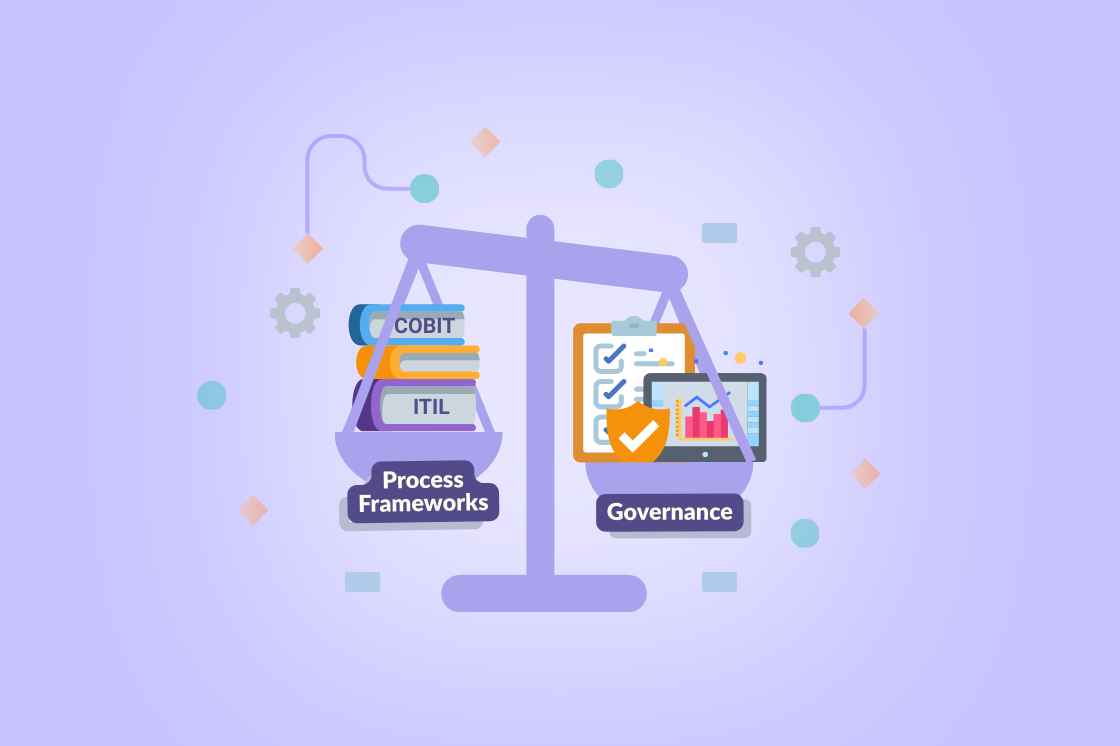
Best practices have value, but I’ll take a basic process that is well governed — consistently followed, measured, and improved — over the perfect “best practice” that’s sitting on a shelf.
Before anyone jumps down my throat, I am a believer in best-practice frameworks. It would be silly not to learn from those who came before us.
In fact, Navvia — the company I co-founded 26 years ago — helps organizations conduct process assessments and process design, and much of what we do is based on best practices, standards, and frameworks.
But hear me out.
A basic incident management process where you log all incidents, prioritize them, resolve them, and follow up — if it is followed by everyone all the time — can produce better results than the “perfect process” that is inconsistently followed or not used at all.
And I know this from experience.
When I started in this industry over 45 years ago, I worked servicing mainframe computers. Back then, few organizations in North America knew anything about best-practice frameworks like ITIL or COBIT. They were still many years in the future.
But we did have process.
Every one of my clients, the company I worked for, and our competitors had processes.
We addressed incidents (even if we called them problems), made changes, managed configurations, monitored systems, and developed disaster recovery plans.
ITIL didn’t invent those processes. It codified them.
As a mainframe technician, I had the unique opportunity to interact with many large enterprises. And I can tell you from experience — some organizations ran very smoothly, while others struggled.
One client, a major telecommunications company, was so well organized that when they placed a repair call they would often recommend the spare part we should bring.
This one thing meant dramatically faster recovery times.
Now a mainframe had — and I am not exaggerating — up to 800 field-replaceable units.
So how could a systems operator, who wasn’t trained to repair the machine, recommend a part?
Practical Governance.
Every time there was an incident, the systems operator would quiz the technician about what failed and what was replaced. That information was logged into an incident tracking system. Incidents were reviewed by technical staff and discussed during regular customer-vendor meetings.
Everything was documented — including recurring failures — and all of it became part of their knowledge base.
And they were more often right than wrong.
Their processes were no more sophisticated than those of our other clients. The difference was that they consistently followed them, managed them, measured them, and improved them.
Their practical governance of a basic process made them far more successful than organizations with more elaborate procedures.
But even well-governed organizations can lose their way.
I’ve seen the same pattern many times.
It usually starts with people complaining that the process is too bureaucratic. Someone questions why process owners are needed. A manager suggests that each department should just do things their own way.
Bit by bit, governance erodes.
Processes are followed a little less carefully. Oversight weakens. Metrics stop being reviewed. Small shortcuts become normal.
Nothing catastrophic happens at first.
Then something serious occurs — a major outage, a failed audit, a security incident — and suddenly everyone rediscovers process discipline.
But the real problem was never the process.
It was the slow erosion of process governance.
I call this the Shark Fin Cycle — because it’s dangerous.
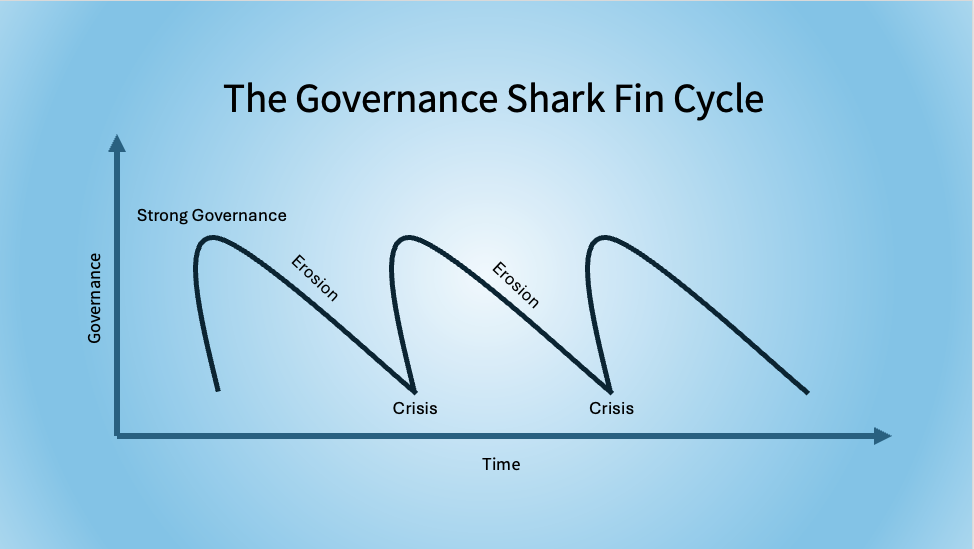
As the diagram shows, governance erodes until a crisis occurs. Leadership rallies to correct the problem, discipline returns, and process governance improves.
But without sustained practical governance, the cycle inevitably begins again. Wouldn't it have been better just to sustain governance and avoid the crisis?
The lesson is simple.
Frameworks are valuable. They give us a body of knowledge and a common language.
But frameworks don’t run organizations.
And without process governance — clear ownership, measurement, accountability, and consistent oversight — even the best-designed processes will slowly drift back toward chaos.
Frameworks can guide you.
But practical governance is what makes processes work.
Best-practice frameworks have value. But I’ll take a basic process that is consistently governed and followed over the most elegant “best practice” sitting on a shelf. Because operational excellence doesn’t come from frameworks. It comes from practical governance.