Digital operational resilience is based on the strength of your IT Service Management processes. In our experience, the biggest risk isn’t a lack of processes or tools — it’s the failure to govern them.
In our previous two articles, we looked at process assessment and process design and their role in operational resilience. In this article, we focus on the most important element of all — process governance.
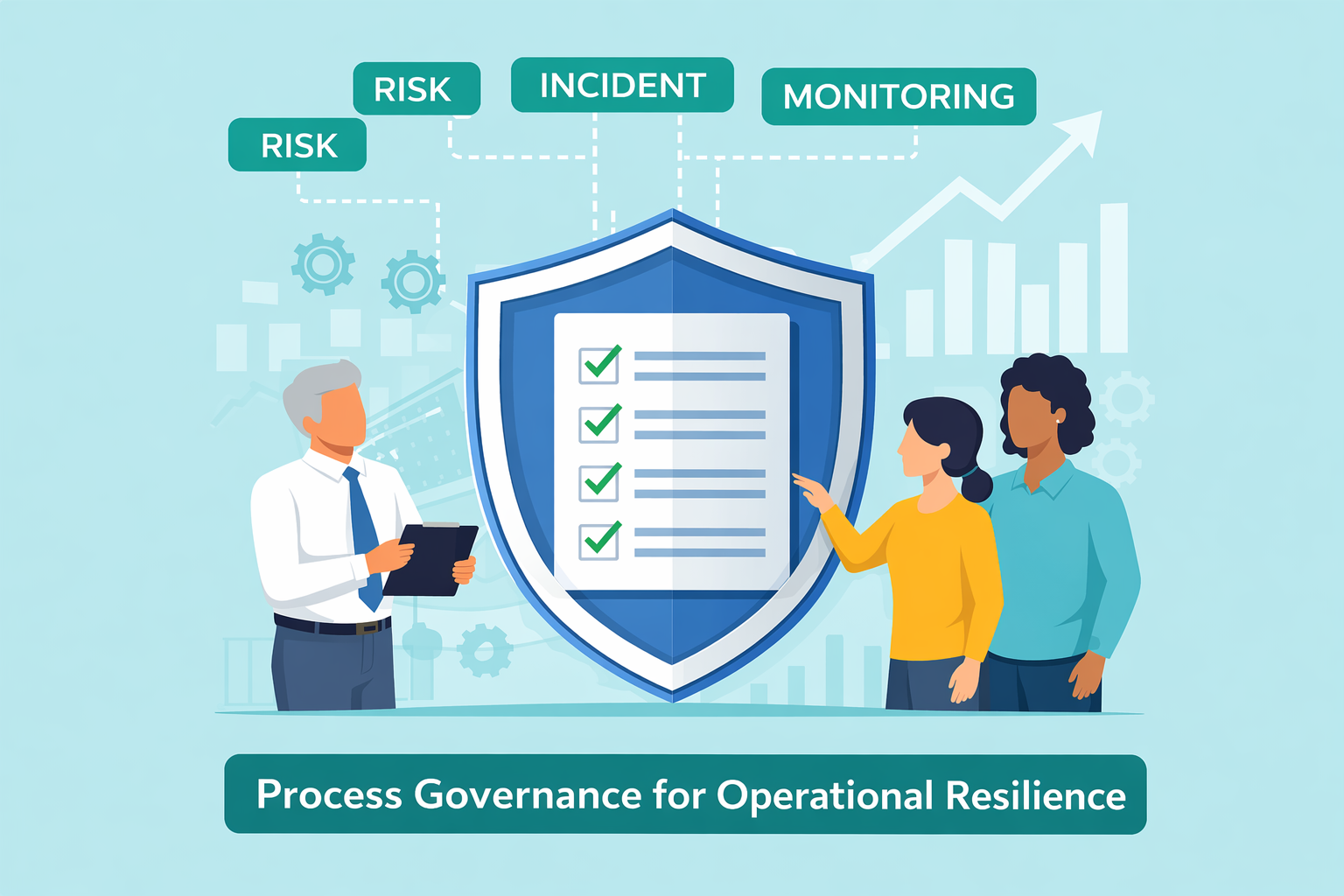
ITSM Process Governance
Process governance is where the rubber meets the road. It goes far beyond selecting a framework like ITIL and rolling out those processes in an IT service management tool — they need to be actively managed and reinforced on a daily basis. Are all departments actually following the process? Is there ongoing awareness and training? Is there clear ownership? Are the processes being measured — and more importantly, improved based on those measurements?
Process governance is not some bureaucratic activity — it’s just good, effective management.
Why Processes Break Down Over Time
A common problem is that too much focus is placed on implementing IT Service Management tools. Organizations equate practicing service management with implementing a tool like ServiceNow, assuming that having the tool in place will magically make their processes better.
Instead of taking the time to understand what they actually need, they focus on the implementation itself, which is often just a lift and shift from a previous tool. Old workflows, categorizations, and reports are carried over to save time, with the belief that new technology alone will fix the problem.
What they fail to do is the hard work of assessing where they are, designing processes that are right for their organization, and consistently executing those processes through day-to-day oversight.
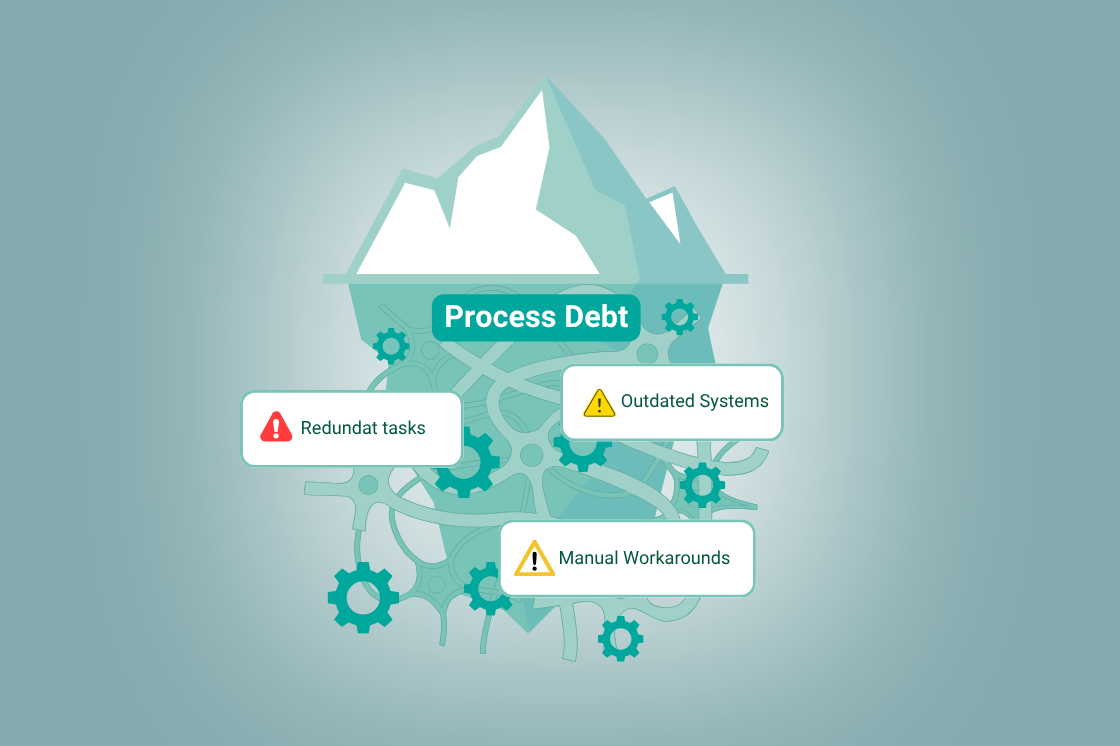
The failure to govern those processes leads to a form of entropy — a gradual breakdown in execution until a crisis occurs. A change is made without being logged, impacting production, and no one knows what happened. Or processes are bypassed to move faster, exposing a security gap and resulting in far greater cost in time, money, and reputation.
After the crisis, everyone focuses on “fixing the process,” but execution remains weak — resulting in another failure down the road.
We call this the “Shark Fin” cycle, and you can read more about it in our article 👉 Practical Governance Beats Best-Practice Frameworks Every Time.
Too much focus on technology — and not enough on process execution — results in far more waste over time than doing it right.
Process Governance in Practice
As a SaaS company, Operational Resilience is an essential to protecting our customers and our reputation.
We regularly undergo third-party risk assessments and are often complimented on our processes and security posture.
This isn't by accident - this is a direct result of practicing practical process governance.
Process Governance is not Bureaucracy
Bureaucracy is adding layers of control that provide no value. At Navvia, we focus on execution. We document our processes and ensure they are followed. When a process fails, we run a post-mortem, define follow-up actions, and reinforce through education. We review and update our processes at least annually and make changes as requirements evolve. Every process has a clear owner who is accountable, and we put the right controls and cadence in place to keep things on track.
This isn’t bureaucracy — it’s proper management.
So what does good process governance look like in practice?
Not additional layers of control, but clear ownership, consistent execution, and regular review. This is what keeps processes aligned, effective, and supporting operational resilience over time.
Accountability Drives Process Execution
Processes don’t fail because they’re unclear — they fail because they’re not enforced.
You can have well-designed processes, documented workflows, and the right tools in place, but if there’s no accountability, execution will drift. People will take shortcuts. Exceptions become the norm. Over time, the process becomes optional.
Governance is what prevents that.
Every process needs a clear owner who is accountable for how it performs. Not just maintaining documentation, but ensuring the process is followed, measured, and improved. Leadership needs to reinforce that expectation, and teams need to understand that processes are not guidelines — they are how work gets done.
This is what turns process into discipline. And discipline is what drives operational resilience.
Ongoing Process Governance
Process governance is not something you implement once.
Organizations change. Teams evolve. New risks emerge. Business priorities shift. If governance doesn’t keep pace, processes begin to drift.
This is where many organizations lose control. They implement processes, roll them out, and then move on — assuming they will continue to perform. They don’t.
Without ongoing governance, visibility is lost. Without visibility, issues go unnoticed. And over time, you end up right back in the Shark Fin cycle.
Ongoing governance keeps processes aligned with how the organization actually operates. It ensures they continue to perform, adapt as needed, and support the business as it evolves.
This is what sustains operational resilience over time.

Assess, Design and Govern
The intent of this three-part series was to look at the practical side of operational resilience — to go beyond GRC and audits and focus on building processes that actually work.
Assessment shows you how your processes actually perform. Design helps you fix what’s broken. Governance ensures those improvements last.
Operational resilience isn’t achieved through frameworks — it’s built into processes that actually work.
Without governance, even well-designed processes break down over time. With it, processes are followed, measured, and continuously improved — and that is what drives operational resilience.